
Nursing Skills for Resume: Clinical and Soft Skills
Which clinical and soft skills to list on a nursing resume, how to prove each one with short results, example bullet points for registered nurses and nursing assistants, and the official pay and licence facts.
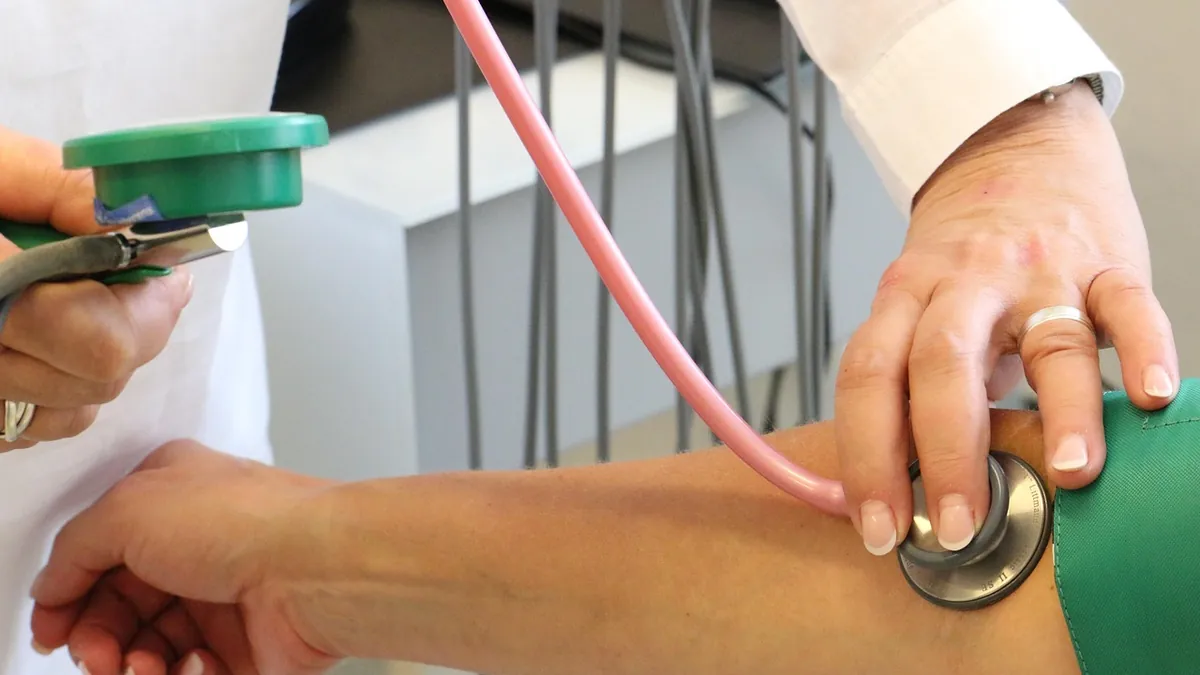
The best nursing skills for resume sections combine clinical skills, such as patient assessment, medication administration and documentation, with the qualities the BLS lists for registered nurses: critical thinking, communication, compassion, attention to detail, emotional stability, organization and physical stamina. Prove each with a short example, and list your licence and life support certificates clearly.
Key facts
- The BLS lists critical-thinking skills, communication skills, compassion, attention to detail, emotional stability, organizational skills and physical stamina as important qualities for registered nurses. (U.S. Bureau of Labor Statistics, Occupational Outlook Handbook, Registered Nurses, Aug 2026)
- US registered nurses had a median pay of $97,550 in May 2025, with about 3,465,400 jobs and 6 percent projected growth from 2025 to 2035. (U.S. Bureau of Labor Statistics, Occupational Outlook Handbook, Registered Nurses, Aug 2026)
- Registered nurses must have a nursing licence issued by the state where they work, and positions may require CPR, basic life support or advanced cardiac life support certification. (U.S. Bureau of Labor Statistics, Occupational Outlook Handbook, Registered Nurses, Aug 2026)
- US nursing assistants and orderlies had a median pay of $41,870 a year ($20.13 an hour) in May 2025, with about 1,558,700 jobs in 2025. (U.S. Bureau of Labor Statistics, Occupational Outlook Handbook, Nursing Assistants and Orderlies, Aug 2026)
- The BLS lists communication skills, compassion, patience and physical stamina as important qualities for nursing assistants and orderlies. (U.S. Bureau of Labor Statistics, Occupational Outlook Handbook, Nursing Assistants and Orderlies, Aug 2026)
- O*NET describes registered nurses as advising patients on health maintenance and disease prevention or providing case management, and lists face-to-face discussions and telephone conversations as daily parts of the work. (O*NET OnLine, Registered Nurses 29-1141.00, 2026)
Choosing the right nursing skills for resume sections helps a busy recruiter see in seconds that you are safe, skilled and ready for the ward. A strong nursing resume mixes clinical skills, such as assessment and medication administration, with the personal qualities that make patients feel cared for. This guide shows which skills to list, how to prove each one with a short result, and gives example bullet points for registered nurses and nursing assistants.
Nursing is one of the largest jobs in healthcare. In the US there were about 3,465,400 registered nurse jobs in 2025, with a median pay of $97,550, and employment is projected to grow 6 percent from 2025 to 2035. Hiring is steady, but competition for good units and day shifts can be strong, so a clear resume matters.
The qualities official profiles list
The US Bureau of Labor Statistics names seven important qualities for registered nurses: critical-thinking skills, communication skills, compassion, attention to detail, emotional stability, organizational skills and physical stamina. For nursing assistants and orderlies it lists communication skills, compassion, patience and physical stamina. These lists are a good base for your skills section, because they match what hiring managers look for.
- Critical thinking: spotting changes in a patient and knowing when to act.
- Communication: explaining care clearly and working well in a team.
- Compassion: caring for patients and families with empathy.
- Attention to detail: the right treatment and medicine at the right time.
- Emotional stability: staying calm in emergencies and hard moments.
- Organization: managing several patients and care plans at once.
- Physical stamina: long shifts on your feet and safe patient handling.
Clinical nurse skills for resume sections
Clinical skills show what you can do safely on a shift. List the ones you use with confidence and that the job advert mentions. Common examples include:
- Patient assessment and monitoring of vital signs
- Medication administration and calculation
- Care planning and evaluation
- Wound care and dressing changes
- IV therapy and cannulation, where trained
- Infection prevention and control
- Electronic health record documentation
- Patient and family education
- Discharge planning
- Safe moving and handling
Use the same words as the advert where they are true for you. Many hospitals use applicant tracking systems that scan for those terms. The ATS keywords tool pulls the key skills from any job advert so you can check your resume against it.
Certificates and licences
The BLS notes that registered nurses must have a nursing licence issued by the state where they work, and that positions may require cardiopulmonary resuscitation (CPR), basic life support or advanced cardiac life support certification. Other countries have their own registration bodies and rules. Put your licence or registration, with its number if the employer asks for it, and your life support certificates with expiry dates near the top of your resume or in a clear section of their own. Recruiters often check these first.
Example bullet points for registered nurses
Strong bullet points start with an action, show the skill and end with a result. Use numbers you can stand behind, and never share patient details.
- Assessed and cared for up to six patients per shift on a 28-bed medical ward, escalating early warning scores in line with policy.
- Administered and documented medicines accurately for a full caseload, with zero medication errors in annual audit.
- Educated patients and families on new medicines and wound care before discharge, using teach-back to check understanding.
- Led the night shift as nurse in charge on a regular basis, coordinating staff and bed flow with the site team.
- Mentored four student nurses during placements and completed their competency assessments.
- Joined the falls prevention group and helped introduce a new bedside checklist.
Nursing assistant skills for resume examples
Nursing assistants and orderlies need many of the same qualities, with a focus on daily care and patience. In the US they had a median pay of $41,870 a year in May 2025, and there were about 1,558,700 jobs. The BLS notes that requirements vary by state, and that nursing assistants often must pass a competency exam and be placed on a state registry to work in a nursing home. Useful skills to list include:
- Personal care: bathing, dressing, feeding and toileting with dignity
- Measuring and recording vital signs
- Safe moving, turning and transfer of patients
- Observing and reporting changes to the nurse
- Infection control and keeping rooms clean and safe
- Calm, kind communication with patients and families
Example bullets: "Supported daily care for 10 residents per shift in a long-term care home, reporting changes in condition promptly." "Recorded vital signs and fluid charts accurately on the electronic system for every resident."
Soft skills that make a nurse stand out
Communication
Nurses explain care, listen to worries and hand over to the next shift. Show this with an example, such as a handover tool you used or a family meeting you supported.
Teamwork
Care depends on doctors, therapists, pharmacists and support staff working together. Mention teams you worked in and how you helped them run smoothly.
Critical thinking
The BLS says nurses must assess changes in a patient's health and decide when to act. A short story about spotting deterioration early is one of the strongest proofs you can give.
Compassion
Patients remember how you made them feel. Feedback, thank you cards or a patient experience award are good evidence if you have them.
Resilience
Emotional stability helps nurses cope with emergencies and loss. You can show it by describing how you stayed calm and effective in a busy or difficult shift.
Technical and digital skills
Modern nursing uses many systems. List the electronic health record, e-prescribing and rostering systems you know, as well as monitoring equipment, infusion pumps and point-of-care testing devices you are trained on. O*NET notes that telephone conversations and face-to-face discussions are part of the daily work of registered nurses, so telephone triage or telehealth experience is also worth adding if you have it.
Where to put skills on a nursing resume
- Profile: two or three lines with your registration, years of experience, specialty and two key strengths.
- Licences and certificates: registration, life support certificates and specialist courses with dates.
- Skills section: eight to twelve clinical and soft skills that match the advert.
- Experience: bullet points that prove those skills with results.
- Education: nursing degree or diploma, placements and any further study.
The CV builder has clean layouts that keep these sections in a clear order and pass applicant tracking systems.
Skills by nursing specialty
Emergency and critical care
Triage, rapid assessment, advanced life support, managing ventilated or unstable patients and working under pressure.
Medical and surgical wards
Pre and post operative care, wound care, pain management, discharge planning and caring for several patients at once.
Paediatrics
Family-centred care, age-appropriate communication, growth and development knowledge and safe medicine calculations for children.
Mental health
Risk assessment, de-escalation, therapeutic relationships and care planning with patients and families.
Community and home care
Independent working, long-term condition management, patient education and coordination with other services.
New graduate nurse skills for resume
If you are newly qualified, your placements are your experience. List each placement with the setting, the length and two or three things you did. Add your skills lab competencies, any healthcare assistant work and volunteering. Recruiters hiring new graduates look for safe practice, willingness to learn and good feedback from mentors, so mention any strong comments from placement assessments.
How to choose nursing skills for resume sections
Start with the job advert, not with your old resume. Read it twice. Mark every skill, test or tool it names. Then look at your own work. Which of those skills do you use each week? Which can you prove with a real story? Those are the skills that go on top.
Next, think about the ward or unit. A busy emergency room wants speed and calm. A care home wants patience and kind daily care. A clinic wants clear advice and good notes. Pick the skills that fit the place, and drop the ones that do not. A short list that fits the job beats a long list that fits no one.
Last, check the balance. You want some clinical skills, some people skills and some systems skills. If your list is all soft skills, add the hands-on work you do. If it is all tasks, add how you care for people. Good nurses do both, and your resume should show both.
Turn duties into results
Many nursing resumes read like a job description. They say what the role was, not what you did well. Fix this by adding a result or a scale to each line. Here are some simple before and after examples.
- Before: Responsible for patient care. After: Cared for up to six adult patients per shift on a busy surgical ward.
- Before: Gave medicines. After: Gave and recorded medicines for a full caseload with no errors in the yearly audit.
- Before: Helped students. After: Supported three student nurses a year and signed off their skills.
- Before: Did handovers. After: Gave clear handovers using a set tool, so the next shift knew each plan.
Use real numbers only. If you do not know an exact figure, use a safe range or describe the scale in words, such as a 30-bed ward or a team of twelve.
An example skills section
Here is how a short, clear skills section can look for a ward nurse. Change it to match your own work and the job you want.
- Patient assessment and early warning scores
- Safe medicine rounds and drug calculations
- Wound care and pressure area care
- Care plans and discharge planning
- Electronic records and clear notes
- Calm, kind talks with patients and families
- Team work across doctors, therapists and support staff
- Life support certificate, in date
Eight lines are enough. Each one is short, plain and easy to scan. Each one can be backed by a line in your work history.
Skills for nurse leaders
If you lead a shift or a team, add leadership skills. These include planning staff for each shift, handling bed flow, solving problems on the floor, coaching new staff and leading safety checks. Show what changed because of you. Did you cut delays? Did a new check reduce falls? Did a new starter settle in faster? One clear result for each is enough.
Nurses who want to work abroad
Nursing rules differ from country to country. Most countries ask you to register with their own nursing body before you can work, and some ask for a language test. Before you apply, check the official site of the nursing body in the country you want. On your resume, list the registrations you already hold and any you have started. Write your skills in plain words that any recruiter can understand, and avoid local short forms that may not travel well.
Common mistakes
- Listing every skill you have ever heard of instead of those that match the job.
- Writing duties without results or examples.
- Missing or expired certificates.
- Including patient names or details, which breaks confidentiality.
- Spelling and drug name errors, which worry recruiters about accuracy.
- Using a complex design that applicant tracking systems cannot read.
Checklist before you apply
- Read the advert and highlight every skill and requirement.
- Match your skills section to it, using the same words where true.
- Check that each key skill appears in at least one bullet point with a result.
- Confirm your registration and certificate dates.
- Keep it to one or two pages, in a simple layout.
- Ask a colleague to proofread it.
Pay and career growth
Pay depends on the country, setting and grade. In the US, the BLS reports a median pay of $97,550 for registered nurses in May 2025. Nurses who take on more training and responsibility can move into advanced practice, education, management or specialist roles, and a skills section that shows growth helps you make that move. For nursing assistants, training to become a licensed practical nurse or a registered nurse is a common next step.
Nursing skills on a cover letter and in interviews
Your resume lists the skills; your cover letter and interview tell the stories behind them. Pick two skills the advert stresses and write one short example for each in your letter. In the interview, use the STAR method, situation, task, action and result, to show how you used a skill with a real patient situation, without names. Recruiters remember clear, calm stories much more than a long list of words.
Keep your skills section up to date
Each time you finish a course, gain a certificate or take on a new task, add it to a running list. Update your resume every few months, not only when you apply. Renew life support certificates before they expire. A current, accurate resume makes it easy to apply quickly when the right job appears.
Ask for feedback
Before you send your resume, ask a senior nurse or a mentor to read it. Ask two questions. Can you tell what kind of nurse I am in ten seconds? Is there a skill I use every day that is missing? People who work with you often spot strengths you take for granted, such as the way you calm a scared patient or keep a hard shift on track. Add those, with a short example, and your resume will sound much more like you.
Keep each version you send, with the date and the job. When you hear back, note what worked. Over time you will learn which skills and stories open doors in your field.
Live on Dev Global Jobs
Right now there are 158,881 open jobs on Dev Global Jobs (live count, 29 October 2026). Browse healthcare jobs, check an advert's key skills with the ATS keywords tool and build your nursing resume in the CV builder.
Frequently Asked Questions
What are the best nursing skills for resume sections?
Clinical skills such as patient assessment, medication administration, care planning and documentation, plus the qualities the BLS lists for registered nurses: critical thinking, communication, compassion, detail, emotional stability, organization and stamina.
How many skills should a nurse list on a resume?
Eight to twelve skills that match the job advert is a good range. Prove the most important ones with bullet points that show results.
What nursing assistant skills for resume sections matter most?
Personal care, measuring vital signs, safe moving and handling, observing and reporting changes, infection control and kind communication. The BLS lists communication, compassion, patience and physical stamina as key qualities.
Where do I put my nursing licence on my resume?
Put your licence or registration and life support certificates near the top, either under your profile or in their own section, with dates. Recruiters often check these first.
How do new graduate nurses show skills without experience?
List each clinical placement with the setting and what you did, plus skills lab competencies, healthcare assistant work, volunteering and good feedback from mentors.
Should I include soft skills on a nursing resume?
Yes. Communication, teamwork, compassion and resilience matter a lot in nursing. Show them with short examples rather than only listing the words.
Sources
- Occupational Outlook Handbook, Registered Nurses, U.S. Bureau of Labor Statistics. Accessed 3 October 2026.
- Occupational Outlook Handbook, Nursing Assistants and Orderlies, U.S. Bureau of Labor Statistics. Accessed 3 October 2026.
- Registered Nurses 29-1141.00, O*NET OnLine. Accessed 3 October 2026.
- How to write a CV, National Careers Service (UK). Accessed 3 October 2026.
- The STAR method, National Careers Service (UK). Accessed 3 October 2026.
- Resumes, MIT Career Advising and Professional Development. Accessed 3 October 2026.
Source: Dev Global Jobs, updated 29 October 2026.
Career Content Editor, Dev Global Jobs
Lutaf Ali is the Career Content Editor at Dev Global Jobs. He has written and edited our guides on jobs, CVs, visas, salaries and careers abroad since the site went live on 18 January 2026, and he runs our official social media. Every fact is checked against official and trusted sources, named in the post, and errors are corrected as soon as readers report them.
Lutaf Ali · About the editorial team · Editorial Policy
Lutaf Ali runs our social media. Follow Dev Global Jobs: Facebook · LinkedIn · Instagram · YouTube · X · Threads · Pinterest
Related Articles

Soft Skills for a Resume: Examples and Hard Skills
Which soft skills employers value, how official frameworks define them, how they differ from hard skills, and how to prove them on a resume with short, real examples.
Read
Skills for Resume: 150 Examples by Job (2026)
150 resume skills sorted by job family, with the method to choose the right ones for each advert and the official skill lists recruiters use.
Read
Skills for Resume: Customer Service Examples That Work
The customer service skills official job profiles say matter most, how to prove each one on a resume with short results, and example bullet points for entry-level and experienced candidates.
Read