
Highest Paying Jobs Without a Degree
Official US pay data for well paid jobs that need no bachelor's degree, from elevator installers and power line workers to two year health roles, with growth figures and routes in.
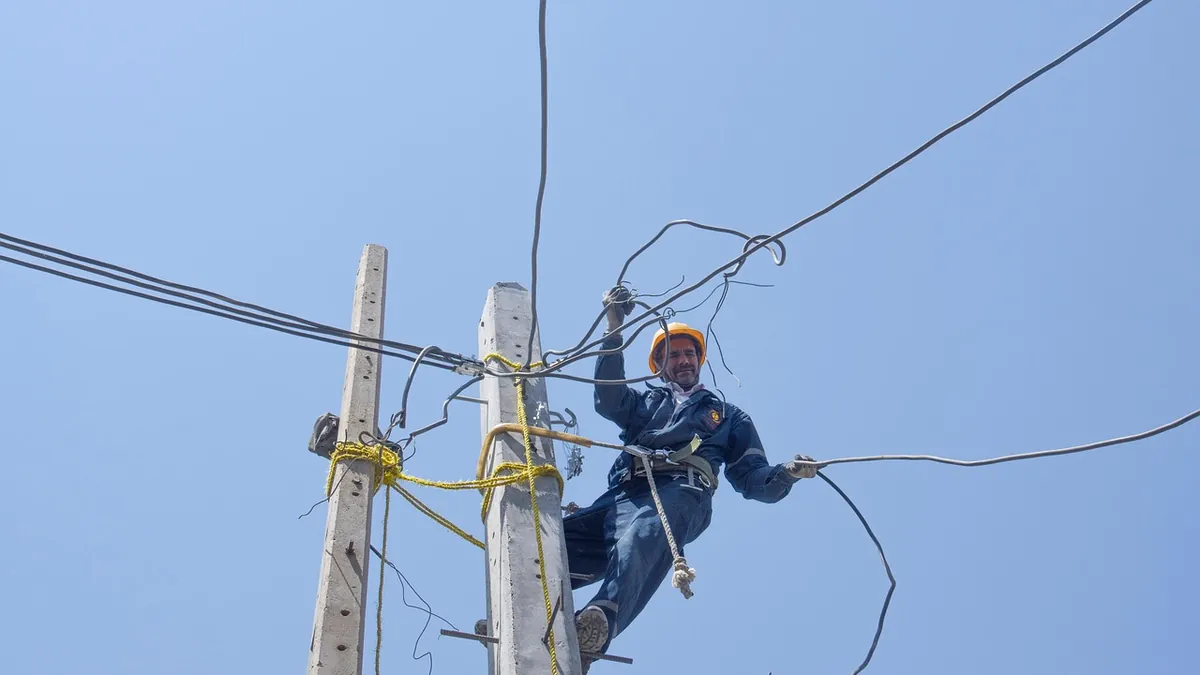
Some of the highest paying jobs without a degree are elevator and escalator installers ($109,910 median in 2025), power plant operators ($105,080) and electrical power line installers ($95,320), according to the BLS. All three start with a high school diploma plus an apprenticeship or long training on the job. The median for all US jobs was $50,980.
Key facts
- Elevator and escalator installers and repairers had a median pay of $109,910 in 2025; they typically need a high school diploma and an apprenticeship. (U.S. Bureau of Labor Statistics, Occupational Outlook Handbook, Elevator and Escalator Installers and Repairers, Aug 2026)
- Electrical power line installers and repairers had a median pay of $95,320 in 2025, with employment projected to grow 10 percent from 2025 to 2035. (U.S. Bureau of Labor Statistics, Occupational Outlook Handbook, Line Installers and Repairers, Aug 2026)
- Wind turbine technicians, who typically need a postsecondary certificate, had a median pay of $64,120 in 2025 and are projected to grow 30 percent from 2025 to 2035. (U.S. Bureau of Labor Statistics, Occupational Outlook Handbook, Wind Turbine Technicians, Aug 2026)
- Air traffic controllers, who typically need an associate's degree, had a median pay of $148,080 in 2025. (U.S. Bureau of Labor Statistics, Occupational Outlook Handbook, Air Traffic Controllers, Aug 2026)
- Dental hygienists, who typically need an associate's degree, had a median pay of $98,100 in 2025, with about 225,300 jobs. (U.S. Bureau of Labor Statistics, Occupational Outlook Handbook, Dental Hygienists, Aug 2026)
- The median annual wage for all US occupations was $50,980 in 2025. (U.S. Bureau of Labor Statistics, Fastest growing occupations, Aug 2026)
The highest paying jobs without degree requirements are not secret, but they are often overlooked. Many people think a four year degree is the only road to good pay. Official US data shows a different picture. Several jobs that start with a high school diploma and an apprenticeship pay around twice the national median, and some two year programs lead to pay close to $100,000 or more.
This guide uses the 2025 median pay published by the US Bureau of Labor Statistics in August 2026. The median annual wage for all US occupations was $50,980. Every job below is compared with that number. The data is from the US, but the same kinds of roles are well paid in many countries, and the routes in are similar.
Highest paying jobs no degree needed: the official list
These roles typically need a high school diploma or a short certificate, followed by an apprenticeship or training on the job. None needs a college degree to start.
| Occupation | 2025 median pay | Typical route in | Outlook 2025 to 2035 |
|---|---|---|---|
| Elevator and escalator installers and repairers | $109,910 | High school diploma, apprenticeship | +6% |
| Power plant operators, distributors and dispatchers | $105,080 | High school diploma, long term training | -4% |
| Electrical power line installers and repairers | $95,320 | High school diploma, long term training | +10% |
| Aircraft and avionics mechanics and technicians | $80,180 | Postsecondary certificate | +6% |
| Railroad workers | $78,820 | High school diploma, training on the job | +1% |
| Boilermakers | $76,410 | High school diploma, apprenticeship | -2% |
| Construction and building inspectors | $74,690 | High school diploma, training on the job | 0% |
| Wind turbine technicians | $64,120 | Postsecondary certificate, long term training | +30% |
| Plumbers, pipefitters and steamfitters | $63,800 | High school diploma, apprenticeship | +7% |
| Flight attendants | $63,580 | High school diploma, training on the job | +9% |
| Electricians | $63,190 | High school diploma, apprenticeship | +9% |
| Diesel service technicians and mechanics | $61,770 | High school diploma, long term training | +4% |
Source: U.S. Bureau of Labor Statistics, Occupational Outlook Handbook occupation profiles, 2025 median pay and 2025 to 2035 projections.
Two year degree routes to high pay
An associate's degree is still a degree, but it takes about two years instead of four and usually costs much less. These roles pay well above the median after a two year program.
| Occupation | 2025 median pay | Outlook 2025 to 2035 |
|---|---|---|
| Air traffic controllers | $148,080 | +2% |
| Nuclear technicians | $110,240 | +1% |
| Radiation therapists | $105,310 | +3% |
| Dental hygienists | $98,100 | +8% |
| Diagnostic medical sonographers | $96,590 | +14% |
| Respiratory therapists | $82,280 | +9% |
| Radiologic and MRI technologists | $81,390 | +5% |
Source: U.S. Bureau of Labor Statistics, Occupational Outlook Handbook occupation profiles.
Where the growth is
Pay is only half the story. A job with growing demand gives you more choice and more security. From the official projections:
- Wind turbine technicians are projected to grow 30 percent from 2025 to 2035, one of the fastest rates of any job.
- Diagnostic medical sonographers are projected to grow 14 percent.
- Electrical power line installers are projected to grow 10 percent.
- Electricians and flight attendants are projected to grow 9 percent.
- Dental hygienists are projected to grow 8 percent.
Some well paid roles are shrinking. Power plant operators are projected to decline 4 percent and boilermakers 2 percent. These jobs still have openings when people retire, but competition may be stronger.
Highest paying jobs no experience required to start
People searching for the highest paying jobs no experience often hope for high pay on day one. That is rare. What many of these jobs offer is a way in without prior experience in a related job, followed by paid training. The BLS lists no related work experience as the usual entry requirement for elevator installers, power plant operators, electricians and air traffic controllers. You learn on the job and your pay rises as your skills grow. An apprentice electrician or elevator installer earns from the first year, usually at a lower rate that increases step by step.
Highest paying jobs without degree requirements: a field by field view
Energy and utilities
Energy jobs are some of the best paid roles without a degree. Power plant operators, power line installers and wind turbine technicians all keep the lights on. The work is skilled and safety critical. Employers train new workers carefully, often over several years. Pay rises with skill, and overtime is common during storms and outages. Wind energy is the fastest growing part of this field, while traditional power plant jobs are expected to shrink a little.
Building and construction trades
Elevator installers, electricians, plumbers, boilermakers and building inspectors all work on buildings and the systems inside them. Most learn through an apprenticeship that mixes paid work with classes. Many states require a licence once training is complete. Experienced trades workers can become supervisors, inspectors or start their own business. The work can be hard on the body, but demand for skilled workers stays steady as buildings need to be built, repaired and kept safe.
Transport
Transport offers several well paid routes. Railroad workers had a median of $78,820 in 2025, and flight attendants $63,580. Both learn through training on the job. Aircraft mechanics need a certificate from an approved program and earn a median of $80,180. Diesel technicians, who keep trucks and buses running, earn a median of $61,770. Shift work, nights and time away from home are common in this field.
Health care with a two year degree
Health care has some of the best paid two year routes. Radiation therapists, dental hygienists and sonographers all earn close to or above $100,000 at the median. They need an associate's degree and usually a state licence. The work is indoors, with patients, and demand is steady or growing as the population ages. If you like science and helping people, this can be a faster and cheaper route than a four year degree.
How long until you earn well
The time it takes to reach good pay is shorter than many people think. An apprentice earns from the first day, at a lower rate that rises as skills grow. A two year health program takes about two years, then licensing. By comparison, a four year degree takes longer and often costs more, and pay only starts after graduation. When you compare routes, count the years of training, the money you earn or spend during that time, and the pay at the end.
Skills that help you get hired
- Math and reading. Most trades and technical jobs use measurements, plans and manuals every day.
- Mechanical sense. An interest in how things work helps in almost every role in this guide.
- Safety habits. Employers value people who follow rules and look out for others.
- Reliability. Showing up on time, every time, matters a lot to employers who train you.
- Physical fitness. Many roles involve lifting, climbing or standing for long periods.
- Communication. Clear talk with customers, patients and team members prevents mistakes.
Writing a CV for trade and technical jobs
A CV for these roles should be short and practical. List any certificates, licences and safety training near the top. Describe hands on work you have done, even if it was in a family business, a school project or volunteering. Mention tools and equipment you can use. If you are applying for an apprenticeship, show your interest in the trade and any related classes, such as math, physics or shop. Keep it to one page and use clear headings so employers can find what they need fast.
How apprenticeships work
An apprenticeship is a job with training built in. You work for an employer and learn from experienced workers, and you usually attend classes too. The US Department of Labor has information on registered apprenticeships on its Apprenticeship.gov site. Length depends on the trade. The BLS says power line programs may last up to 3 years, elevator installers typically start with a 4 year apprenticeship, and most electricians train in a 4 or 5 year program with about 2,000 hours of paid training on the job each year. You are paid from the start, and your pay rises as you progress. At the end you have a recognised qualification and often a licence. The big advantage over college is that you earn instead of borrow while you learn.
Entry rules differ by program, so read each listing carefully. Basic math, reading and physical fitness matter for many trades. Workers with related experience, for example from military service, may qualify for a shorter apprenticeship, the BLS notes.
A closer look at five top roles
Elevator and escalator installers
They install, fix and maintain elevators, escalators and moving walkways. The work needs mechanical and electrical skills, and a good head for heights. According to the BLS, a career typically begins with a 4 year apprenticeship, and most states require a licence. With a median of $109,910, this is the best paid trade in the BLS data.
Electrical power line installers
They build and repair the lines that carry electricity. The work is outdoors, often at height, and sometimes in bad weather after storms. It pays a median of $95,320, and demand is projected to grow 10 percent as power grids are upgraded.
Power plant operators
They control the systems that make and send out electricity. Most learn through long training on the job. Pay is high at $105,080, but the number of jobs is projected to fall, so openings come mainly from retirements.
Aircraft and avionics mechanics
They inspect and repair aircraft. Most complete an aviation maintenance program approved by the Federal Aviation Administration and are then certified by the FAA. The median pay is $80,180, and demand is projected to grow 6 percent.
Wind turbine technicians
They install and maintain wind turbines. Many complete a certificate or associate's degree in wind energy technology at a technical school or community college. Pay is lower than the top roles at $64,120, but growth of 30 percent makes it one of the most promising fields.
Paying for training
One big benefit of these routes is cost. In an apprenticeship, the employer pays you while you learn, and classes are often covered by the employer, a union or a public program. Short certificate and two year programs cost money, but usually far less than a four year degree. Community colleges, public workforce programs and some employers offer financial help. Before you sign up for any paid course, check that it leads to the licence or certificate employers in your area ask for, and look at how many graduates find work in the field.
Myths about jobs without a degree
- Myth: they all pay poorly. Official data shows several roles above $100,000 at the median.
- Myth: there is no career growth. Many trades lead to supervisor, inspector, trainer or business owner roles.
- Myth: they will all be automated soon. Hands on work in changing places, like repairing lines or elevators, is hard to automate.
- Myth: you can never go to college later. Many workers add a degree later, sometimes with help from their employer.
How to choose the right path
- Match the job to your strengths. Some roles need physical strength and comfort with heights. Others, like inspectors and dispatchers, are more about focus and attention to detail.
- Check local demand. Search job boards in your area for each title and see how many openings there are.
- Talk to people in the job. Ask about the hours, the hardest parts and how they got started.
- Compare training time and cost. An apprenticeship pays you; a two year program costs money but is shorter.
- Look at the long term. Many trades lead to supervisor, inspector or business owner roles later on.
The trade offs
- Many trade jobs are physically hard and can involve heights, heat, cold or confined spaces.
- Some roles need early starts, nights, weekends or call outs.
- Apprenticeship pay starts lower and rises over several years.
- Licences and safety rules must be kept up to date.
- Some well paid roles are in shrinking fields, so openings may be fewer.
On the other side, these jobs build real skills that are hard to replace with software, and they let you earn while you learn instead of taking on large student debt.
Your first step this week
Pick two roles from the tables that fit your strengths. Read the full BLS profile for each one. Search for apprenticeships or training programs near you, and note the entry rules and start dates. Then talk to one person who already does the job. A single honest conversation can save you months of guessing and help you choose a path you will stick with.
Write down what you learn, compare the routes side by side, and set a date to apply.
Outside the US
The pay figures here are for the US, but the pattern is similar in many countries. Skilled trades, energy, transport and technical health roles tend to pay well without a university degree, and many countries run official apprenticeship systems. Check your national careers service or labour ministry for local pay data and approved training routes.
Live on Dev Global Jobs
Right now there are 112,708 open jobs on Dev Global Jobs (live count, 8 November 2026). Compare pay across countries with the country salary calculator, and use the career path tool to plan your route into a trade or technical job. Build a skills based CV in the CV builder.
Frequently Asked Questions
What are the highest paying jobs without a degree?
According to BLS 2025 data, elevator and escalator installers ($109,910), power plant operators ($105,080) and electrical power line installers ($95,320) are among the best paid jobs that start with a high school diploma and training.
What are the highest paying jobs no degree and no experience?
Few jobs pay highly on day one, but apprenticeships for elevator installers and electricians, and long training on the job for power plant operators, start without related experience and pay you while you learn.
Is an associate's degree worth it for high pay?
It can be. Air traffic controllers ($148,080), radiation therapists ($105,310) and dental hygienists ($98,100) typically need an associate's degree and earn well above the US median of $50,980.
Which jobs without a degree are growing fastest?
Wind turbine technicians are projected to grow 30 percent from 2025 to 2035. Diagnostic medical sonographers (14 percent, associate's degree) and power line installers (10 percent) also grow fast.
How long does an apprenticeship take?
It depends on the trade. The BLS says power line programs may last up to 3 years, elevator installers typically start with a 4 year apprenticeship and most electricians train for 4 or 5 years. You are paid from the start.
Can I earn six figures without a degree?
Yes. Elevator and escalator installers and power plant operators had median pay above $100,000 in 2025, and many workers in other trades earn more than the median with experience and overtime.
Sources
- Occupational Outlook Handbook, Elevator and Escalator Installers and Repairers, U.S. Bureau of Labor Statistics. Accessed 3 October 2026.
- Occupational Outlook Handbook, Line Installers and Repairers, U.S. Bureau of Labor Statistics. Accessed 3 October 2026.
- Occupational Outlook Handbook, Wind Turbine Technicians, U.S. Bureau of Labor Statistics. Accessed 3 October 2026.
- Occupational Outlook Handbook, Air Traffic Controllers, U.S. Bureau of Labor Statistics. Accessed 3 October 2026.
- Occupational Outlook Handbook, Dental Hygienists, U.S. Bureau of Labor Statistics. Accessed 3 October 2026.
- Fastest growing occupations, 2025 and projected 2035, U.S. Bureau of Labor Statistics. Accessed 3 October 2026.
- Apprenticeship.gov, U.S. Department of Labor. Accessed 3 October 2026.
Source: Dev Global Jobs, updated 8 November 2026.
Career Content Editor, Dev Global Jobs
Lutaf Ali is the Career Content Editor at Dev Global Jobs. He has written and edited our guides on jobs, CVs, visas, salaries and careers abroad since the site went live on 18 January 2026, and he runs our official social media. Every fact is checked against official and trusted sources, named in the post, and errors are corrected as soon as readers report them.
Lutaf Ali · About the editorial team · Editorial Policy
Lutaf Ali runs our social media. Follow Dev Global Jobs: Facebook · LinkedIn · Instagram · YouTube · X · Threads · Pinterest
Related Articles

Highest Paying Jobs in the US: BLS Data
Official BLS median pay for the best paid occupations in the United States, the top roles outside medicine, well paid jobs that need no bachelor's degree, and which high paying fields are growing.
Read
Highest Paying Jobs in Finance: Official Pay
Official 2025 pay for the best paid finance roles in the US and UK, which ones are growing, the qualifications they need and how to move up.
Read
Highest Paying Jobs in Australia: Official Data
Official ABS figures on the best paid occupations in Australia, from anaesthetists and surgeons to engineering managers, mining and electrical trades, with context on the median and how skilled visas work.
Read