
How to Work Abroad as a Teacher: Jobs, Pay, Certificates
What it takes to teach abroad: degrees, TEFL, TESOL and CELTA certificates, a worked example from Korea's EPIK public school program with its Fall 2026 pay scale and benefits, visas, contracts and how to avoid bad offers.
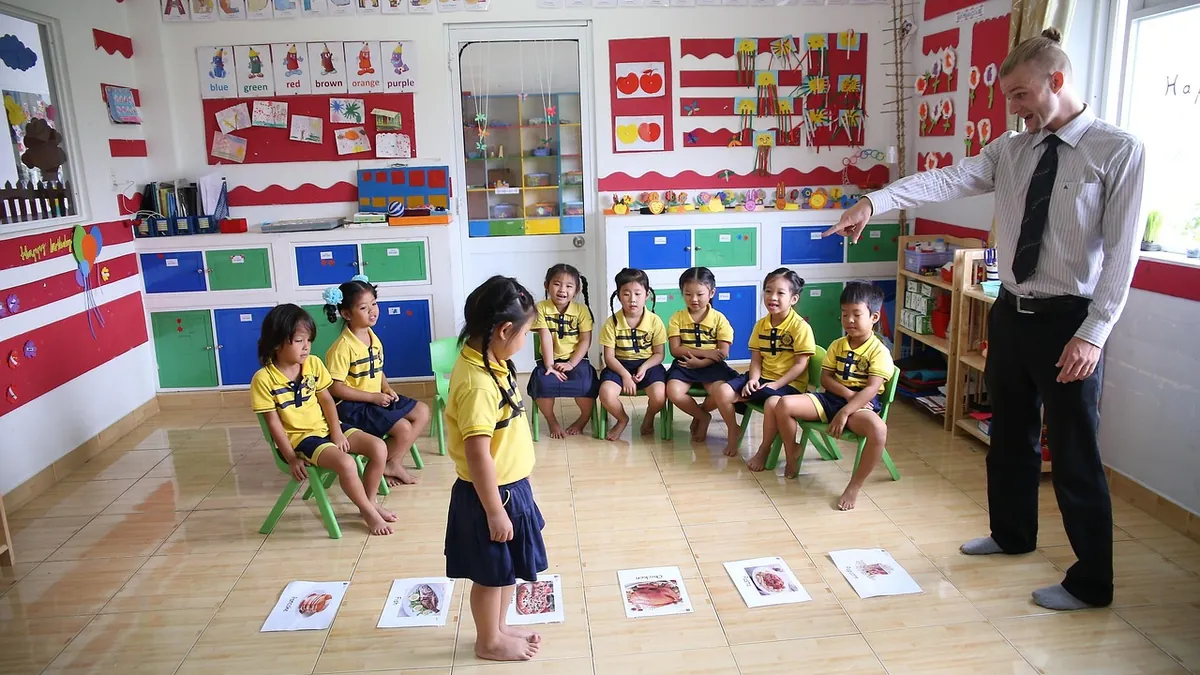
To work abroad as a teacher, you usually need a bachelor's degree, a teaching licence or a TEFL, TESOL or CELTA certificate of at least 100 hours, a clean background check and the right work visa. Public programmes such as Korea's EPIK publish clear rules, pay scales and benefits, which makes them a safe place to start.
Key facts
- EPIK, Korea's public school English program, requires citizenship of Australia, Canada, Ireland, New Zealand, the UK, the US or South Africa (with an exception for Indian citizens holding a teaching certificate in English education), a bachelor's degree and, for non-education graduates, a TEFL, TESOL or CELTA certificate of at least 100 hours. (EPIK, Eligibility, 2026)
- EPIK teachers must hold an E-2 visa before arriving in Korea; they cannot attend orientation or work without it, except holders of certain other statuses or Korean passports. (EPIK, Eligibility, 2026)
- For the Fall 2026 intake, EPIK monthly pay ranges from about 2.2 to 2.8 million KRW depending on level and provincial office, with Seoul using a separate pay scale; offices are not currently hiring Level 3 applicants. (EPIK, Salary and Benefits, May 2026)
- EPIK benefits include provided housing (utilities paid by the teacher), a one-time 300,000 KRW settlement allowance, a 1,800,000 KRW entrance allowance, a 1,300,000 KRW contract completion bonus in most provinces and severance pay of about one month's salary. (EPIK, Salary and Benefits, May 2026)
- In the US, adult basic and secondary education and ESL teachers had a median pay of $61,540 in May 2025, with employment projected to decline 14 percent from 2025 to 2035. (U.S. Bureau of Labor Statistics, Occupational Outlook Handbook, Adult Basic and Secondary Education and ESL Teachers, Aug 2026)
Many people dream of the chance to work abroad as a teacher, whether for a year of adventure or a long international career. Teaching English is the most common route, but qualified subject teachers are also hired by international schools around the world. The key is to know what qualifications you need, how pay and contracts really work, and which employers you can trust. This guide explains the requirements and uses Korea's public school programme, EPIK, as a detailed real example with its official Fall 2026 pay scale.
What you need to work abroad as a teacher
Requirements vary by country and employer, but most good teaching jobs abroad ask for the same core items:
- A bachelor's degree in any subject for most English teaching roles, and in education or your subject for international school roles.
- A teaching qualification: a teaching licence for international schools, or a TEFL, TESOL or CELTA certificate for English teaching.
- A clean background check from your home country.
- The right work visa for the country, arranged with your employer.
- Good health and, for some programmes, a health check.
Work abroad TEFL: which certificate
TEFL, TESOL and CELTA are certificates in teaching English to speakers of other languages. Employers often ask for at least 100 hours of training from an accredited course. Korea's EPIK programme, for example, says applicants whose degree is not in education need a TEFL, TESOL, CELTA or similar certificate of at least 100 hours from an accredited programme, while those with a teaching licence or an education-focused degree do not need one. Choose an accredited course with real teaching practice, and keep your certificate and transcript ready to send.
A real example: Korea's EPIK programme
EPIK, the English Program in Korea, places native English speakers in public schools across the country. Because it is run through Korea's public education offices, it publishes its rules openly, which makes it a useful model of what to expect.
Who can apply
EPIK says teachers must be citizens of Australia, Canada, Ireland, New Zealand, the United Kingdom, the United States or South Africa, and must have studied from at least junior high level and graduated from a university in one of those countries. Under a trade agreement, Indian citizens can also apply if they meet all other requirements and hold a valid teaching certificate in English education. A bachelor's degree is required, and non-education graduates need a TEFL, TESOL or CELTA certificate of at least 100 hours. Applicants must hold an E-2 visa before arriving; EPIK says you cannot attend orientation or work without it, except holders of certain other statuses or Korean passports.
Pay for the Fall 2026 intake
EPIK publishes a pay scale by level and provincial office of education, updated in May 2026 for the Fall 2026 intake. Monthly pay ranges from about 2.2 to 2.8 million KRW depending on level and location. Level 2, for example, sits around 2.2 to 2.35 million KRW, and Level 1+ around 2.5 to 2.8 million KRW. Seoul uses its own separate pay scale. EPIK also notes that offices are not currently hiring Level 3 applicants, so all applicants must qualify for at least Level 2 before signing.
How levels work
EPIK levels depend on qualifications and experience. Level 2 can be reached with a bachelor's degree plus a 100-hour TEFL, TESOL or CELTA certificate, a bachelor's degree plus a teacher's licence, or a degree in education or TESOL. Higher levels need full-time teaching experience or a relevant master's degree, and some provinces add higher levels for teachers who renew contracts for several years.
Benefits
EPIK lists a range of benefits for all teachers. Housing is provided by the education office, though utilities and maintenance fees are paid by the teacher, and housing size and location vary by region. There is a one-time settlement allowance of 300,000 KRW, an entrance allowance of 1,800,000 KRW (treated as a loan if the contract ends in the first six months) and, in most provinces, a contract completion bonus of 1,300,000 KRW. Teachers who complete their contract receive severance pay of about one month's salary, and renewing teachers receive a renewal bonus. Details vary by province, so always read your own contract.
Example: Maya joins EPIK
Maya is from Canada. She has a degree in history, not education. So she takes an accredited TEFL course of 120 hours. With her degree and the certificate, she can reach Level 2 on the EPIK pay scale. She applies to EPIK, sends her documents and passes the interview. Then she gets her E-2 visa before she flies. In Korea, she goes to orientation and starts at a public school in one of the provinces. Her monthly pay is set by the Level 2 scale for her province. Her housing is provided, but she pays her own utilities. She gets a settlement allowance in her first month and an entrance allowance. If she finishes her contract, she gets a completion bonus in most provinces and severance pay of about one month's salary. If she renews, she earns a renewal bonus and may move up a level.
Maya plans carefully for her first weeks. She brings enough savings to cover food, transport and a phone until her first pay day. She learns some basic Korean before she leaves. And she keeps copies of her contract and documents in one safe folder.
Teaching children or adults
Most English teaching jobs abroad are with children in schools or private academies. Some are with adults in companies, universities or language centres. Children's classes need energy, games, songs and clear routines. Adult classes are often more about conversation, business English or exam preparation. Think about which you enjoy more. Your TEFL course should give you practice with the age group you plan to teach.
Classroom skills that help
Schools look for teachers who can plan clear lessons, manage a class calmly and adapt to students at different levels. Patience matters. So does a friendly, steady manner. Simple tools help too: picture cards, short games and clear instructions with gestures. If you have worked with children before, as a tutor, a coach or a camp leader, say so on your CV. It shows you can handle a room full of young learners.
Your CV for teaching abroad
Keep your CV clear and focused on teaching. Put your degree, your teaching certificate with its hours, and any classroom or tutoring experience near the top. Add volunteer work with children, languages you speak and any time you have lived abroad. Some countries expect a photo on a teaching CV, but many do not; follow the employer's instructions. The CV builder has clean layouts that work well for teaching roles.
Interviews and demo lessons
Teaching interviews often happen by video. Expect questions such as why you want to teach abroad, how you would handle a noisy class and how you would teach a simple grammar point. Some employers ask for a short demo lesson. Keep it simple: a clear goal, a short warm-up, a fun activity and a quick check that students understood. Smile, speak clearly and show that you can adapt.
International schools
International schools teach a foreign or international curriculum, often in English, to local and expatriate children. They usually hire qualified teachers with a teaching licence and classroom experience in a subject such as maths, science or English. Pay and benefits vary widely; many schools offer housing support, flights and health insurance, but you must check each offer. Good schools are often accredited by recognised bodies and are open about their contracts.
Teaching in Europe
Within the European Union, EU citizens can usually move and work freely between member states, which makes teaching jobs easier to take up. EURES, the European job mobility portal, lets you search jobs across Europe and read about living and working conditions in each country. Non-EU teachers usually need a national work permit and may face stricter rules. Language schools, universities and international schools are common employers.
Pay at home for comparison
If you are deciding between teaching abroad and at home, official data helps. In the US, the Bureau of Labor Statistics reports that adult basic and secondary education and ESL teachers had a median pay of $61,540 in May 2025, but employment is projected to decline 14 percent from 2025 to 2035. Teaching abroad can offer housing and allowances that change the real value of a lower salary, so compare full packages, not just pay.
How to find teaching jobs abroad
- Start with public programmes such as EPIK, which publish clear rules and pay.
- Look at accredited international schools if you have a teaching licence.
- Use official and trusted job boards, including education jobs on Dev Global Jobs.
- Check each employer through reviews, accreditation and official business records.
- Prepare your documents early: degree, transcripts, certificate, background check and references.
Contracts: what to check
- Monthly pay and when it is paid.
- Teaching hours per week and any extra duties.
- Housing: provided or allowance, and who pays utilities.
- Flights, bonuses and severance.
- Health insurance and sick leave.
- Holiday days and when you can take them.
- What happens if you or the employer end the contract early.
Avoiding bad offers and scams
Teaching abroad attracts scams and poor employers. Be careful if a school asks you to pay a placement fee, will not give a written contract, asks you to enter on a tourist visa to work, or cannot be verified. Legitimate employers arrange the correct work visa, give a clear written contract and answer questions openly. Talk to current or former teachers where you can.
Comparing two offers
Suppose you have two offers. One pays more each month but gives no housing. The other pays less but includes a flat. To compare them, work out your real monthly costs in each place: rent, utilities, food, transport and phone. Then add one-off items such as flights, bonuses and severance across the full contract. Often the offer with housing leaves you with more money at the end of the year, even if its monthly pay looks lower. Also weigh softer points: class sizes, teaching hours, support for new teachers and the reputation of the employer. A slightly lower salary with good support can make for a much better year.
Preparing to move
Plan for the first month before your first salary arrives: deposits, transport and setting up a phone and bank account. Learn some of the local language and culture before you go. Bring copies of your documents, including your degree and certificate. Many programmes offer an orientation; take it seriously, because it covers the rules and support you will rely on.
Your first weeks in a new country
The first weeks are busy. You will set up a bank account, a phone and maybe a local registration card. You will learn your way to school, meet your co-teachers and find out how lessons are planned. Ask questions early. Most schools have a contact person for new foreign teachers. Write down key names, numbers and routines. Join groups of other teachers in your area; they can answer small questions fast and help you feel at home.
Working with co-teachers
In many public school programmes, you will teach alongside a local teacher. Good teamwork makes a big difference. Agree who leads which part of the lesson. Share plans ahead of time. Respect local school customs, even when they differ from what you know. Ask for feedback, and offer ideas in a friendly way. Strong co-teaching relationships often lead to better lessons and a happier year.
Health, money and safety
Check what health insurance your contract includes and how to use it. Keep some savings for emergencies. Learn the local emergency numbers and the address of your nearest clinic. If you have a problem at work, start with your school contact or programme office. Official programmes have clear processes for handling concerns, which is another reason they are a safer first choice than unknown private employers.
After your contract
When your contract ends, you have choices. You can renew and move up the pay scale, move to another country, or return home with new skills. Ask for a reference letter before you leave. Update your CV with your teaching hours, age groups and any extra roles, such as running a club or helping with exams. Many teachers use their time abroad as a step toward careers in education, training, international development or business.
Is teaching abroad right for you?
Teaching abroad can be deeply rewarding. You help students learn, live in a new culture and build skills such as communication, patience and adaptability that employers value. It can also be challenging: homesickness, a new language and a different way of working. Think about what you want from the experience, how long you want to stay and how it fits your longer career plans.
If you are unsure, start with a single contract in a well-run public programme. One year is long enough to learn whether you love the work and short enough to change course if you do not. Many teachers who planned to stay for one year end up staying for several, moving between countries and building a real international career. Others come home with stronger skills, a broader outlook and stories that make them stand out in any job interview for years to come. Either way, the year is rarely wasted.
Live on Dev Global Jobs
Right now there are 118,803 open jobs on Dev Global Jobs (live count, 5 November 2026). Browse education jobs and prepare your teaching CV in the CV builder.
Frequently Asked Questions
What do I need to work abroad as a teacher?
Usually a bachelor's degree, a teaching licence or a TEFL, TESOL or CELTA certificate of at least 100 hours, a clean background check and the right work visa arranged with your employer.
Do I need a TEFL certificate to work abroad?
For many English teaching jobs, yes, if your degree is not in education. EPIK, for example, requires at least 100 hours from an accredited programme for non-education graduates.
How much do EPIK teachers earn in 2026?
For the Fall 2026 intake, EPIK monthly pay ranges from about 2.2 to 2.8 million KRW by level and province, with housing provided and extra allowances. Seoul uses a separate scale.
Who can apply to EPIK?
Citizens of Australia, Canada, Ireland, New Zealand, the UK, the US or South Africa with a bachelor's degree, plus Indian citizens with a teaching certificate in English education under a trade agreement.
Can I teach abroad without a degree?
Most reputable programmes and schools require a bachelor's degree, and many work visas for teachers require one too. Without a degree, options are very limited.
How do I avoid teaching job scams?
Avoid employers that ask for placement fees, refuse a written contract or ask you to work on a tourist visa. Check accreditation and talk to current or former teachers.
Sources
- Eligibility, EPIK (English Program in Korea). Accessed 3 October 2026.
- Salary and Benefits, EPIK (English Program in Korea). Accessed 3 October 2026.
- Occupational Outlook Handbook, Adult Basic and Secondary Education and ESL Teachers, U.S. Bureau of Labor Statistics. Accessed 3 October 2026.
- EURES, the European job mobility portal, European Commission. Accessed 3 October 2026.
- How to write a CV, National Careers Service (UK). Accessed 3 October 2026.
Source: Dev Global Jobs, updated 5 November 2026.
Career Content Editor, Dev Global Jobs
Lutaf Ali is the Career Content Editor at Dev Global Jobs. He has written and edited our guides on jobs, CVs, visas, salaries and careers abroad since the site went live on 18 January 2026, and he runs our official social media. Every fact is checked against official and trusted sources, named in the post, and errors are corrected as soon as readers report them.
Lutaf Ali · About the editorial team · Editorial Policy
Lutaf Ali runs our social media. Follow Dev Global Jobs: Facebook · LinkedIn · Instagram · YouTube · X · Threads · Pinterest
Related Articles

Teacher Skills for a Resume (With Examples)
The skills official job profiles say teachers need, how to show them with results on your resume, example bullet points for each school level, and mistakes to avoid.
Read
Teacher Interview Questions and Answers PDF Guide
The questions school panels ask most, sample answers for new and experienced teachers, how to prepare a demonstration lesson, and how to save this guide as a printable PDF.
Read
How to Land Education Jobs Abroad: Schools, Pay, and Visas
You get hired through four routes: international schools, recruiting agencies, job boards, and government or teach-abroad programs. Visas almost always come through the employer, so you apply for jobs first and handle the visa second.
Read