
Cover Letter Length: How Long Should a Cover Letter Be?
The exact length university careers offices and public career services recommend, how it changes for email, online forms and academic jobs, and how to cut or expand your letter.
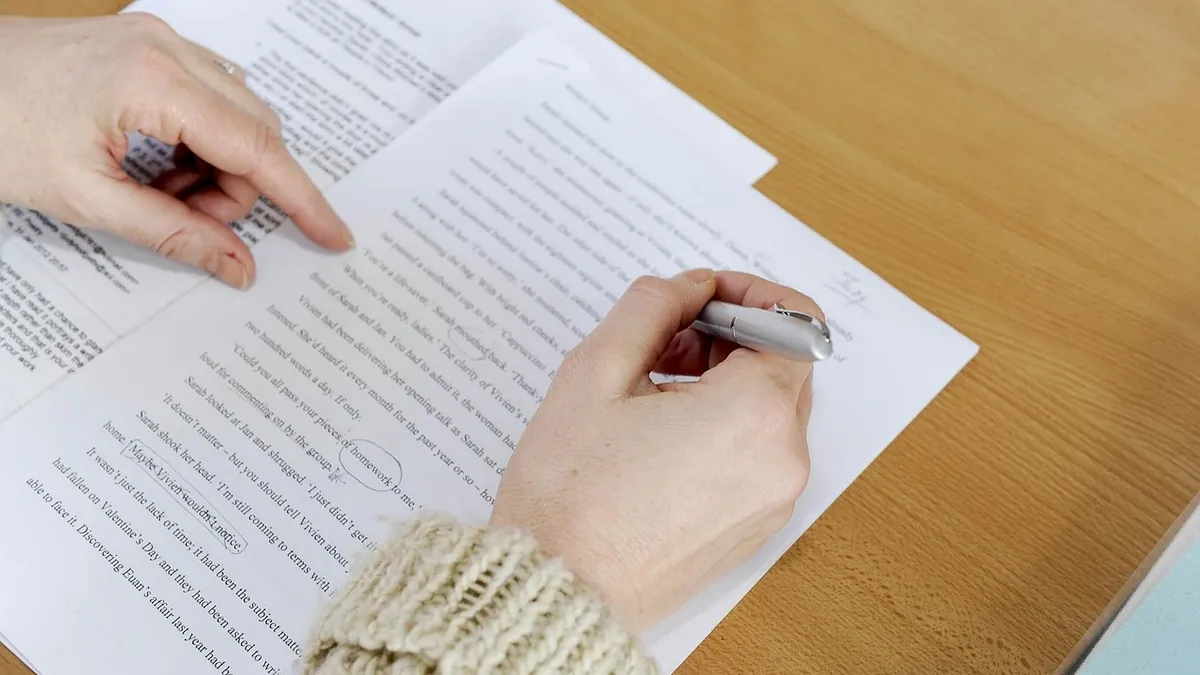
How long should a cover letter be? The right cover letter length for most jobs is one page: three to four short paragraphs and about 250 to 400 words, which is what careers offices at Harvard, MIT and Yale advise. Email letters should be shorter, online forms set their own limits, and academic posts can run to two pages. Below you will find the numbers for each case.
For most jobs a cover letter should fit on one page, with three to four short paragraphs and about 250 to 400 words. Harvard's careers office recommends 250 to 400 words, and the UK National Careers Service describes a short letter of 3 to 5 paragraphs. Academic job letters can run longer, up to two pages.
Key facts
- Harvard's careers office advises keeping a cover letter to one page, three to four short paragraphs and 250 to 400 words, and notes that recruiters often spend less than 30 seconds on a first read. (Harvard FAS Mignone Center for Career Success, How to Write a Cover Letter That Actually Gets You Hired in 2026, Aug 2026)
- The UK National Careers Service describes a cover letter as a short letter, usually 3 to 5 paragraphs long, which can be sent as an email for online applications. (National Careers Service, How to write a cover letter, 2026)
- MIT's career office says a cover letter should be no longer than one page, with a font size between 10 and 12 points, an introduction, 2 to 3 body paragraphs and a closing. (MIT Career Advising and Professional Development, How to write an effective cover letter, 2026)
- Yale's Office of Career Strategy recommends three to four paragraphs on one page, with opening and closing paragraphs of one to three sentences and body paragraphs of three to five sentences. (Yale Office of Career Strategy, Cover Letters and Correspondence, 2026)
- For academic job applications, Berkeley's career centre says a cover letter should not exceed a page and a half or two pages at the most. (Berkeley Career Engagement, The Cover Letter (academic job search), 2026)
How long should a cover letter be? For most jobs the answer is short: one page, three to four paragraphs and about 250 to 400 words. That is the advice of university careers offices such as Harvard, MIT and Yale, and it matches the UK National Careers Service, which describes a cover letter as a short letter of usually 3 to 5 paragraphs.
But the right length also depends on how you apply. An email cover letter should be shorter. An online form may give you a strict character limit. An academic job may expect two pages. This guide gives you the exact numbers for each case, shows what each paragraph should do, and explains how to cut a long letter or build up a thin one.
The short answer
| Measure | Recommended | Source |
|---|---|---|
| Pages | One page | Harvard, MIT, Yale |
| Words | 250 to 400 | Harvard |
| Paragraphs | 3 to 4 (UK guidance: 3 to 5) | Harvard, Yale, National Careers Service |
| Opening and closing paragraphs | 1 to 3 sentences each | Yale |
| Body paragraphs | 3 to 5 sentences each | Yale |
| Font size | 10 to 12 points | MIT |
| Academic jobs | Up to 1.5 or 2 pages | Berkeley |
Harvard's careers office adds a useful reason for keeping it short: recruiters often spend less than 30 seconds on a first read. A letter that makes its point in the first few lines is far more likely to be read in full.
How long should a cover letter be for each type of application
The one page rule is a ceiling, not a target. Use this guide to pick the right length for the way you are applying.
| Situation | Suggested length | Why |
|---|---|---|
| Standard job with a CV upload | 250 to 400 words, one page | Enough room for two strong examples without repeating your CV |
| Cover letter in the body of an email | 150 to 250 words | Emails are read on phones and skimmed quickly |
| Online form with a text box | Stay inside the limit, aim for 80 to 100 percent of it | Text over the limit is cut off or rejected |
| Entry level or internship | 200 to 350 words | Focus on one project, one skill and your motivation |
| Senior or specialist role | Up to one full page | More results to show, but still one page |
| Academic or research post | Up to 1.5 or 2 pages | Research and teaching plans need more space |
| Speculative letter with no advert | 200 to 300 words | The reader did not ask for it, so respect their time |
The word ranges for email, entry level and speculative letters are practical guidance based on the one page rule and the short reading time, not fixed official numbers. Always follow any length the employer states in the advert.
What each paragraph should do
Length is easier to control when every paragraph has one job. Yale's careers office suggests three to four paragraphs, with a short opening and closing and fuller body paragraphs. MIT suggests an introduction, two to three body paragraphs and a closing.
- Opening, 1 to 3 sentences. Name the role, say why you want it and give your strongest reason to read on. Skip tired openers that say nothing.
- Body paragraph one, 3 to 5 sentences. Match your best skill to the most important need in the advert, with one real example and a result.
- Body paragraph two, 3 to 5 sentences. Add a second skill or achievement, ideally one that is not obvious from your CV.
- Optional third body paragraph. Show why this employer in particular, based on real research.
- Closing, 1 to 3 sentences. Say clearly that you would welcome an interview and thank the reader.
The UK National Careers Service gives the same shape in plain terms: introduce yourself and explain how you found the job, highlight the skills that match what the employer wants, and close politely. It also reminds you to end with Yours sincerely if you know the reader's name, and Yours faithfully if you wrote Dear Sir or Madam.
Signs your letter is too long
- It runs onto a second page for a non academic job.
- It repeats your CV line by line.
- It has more than four paragraphs or any paragraph longer than six sentences.
- It explains your whole career story instead of the parts that matter for this job.
- It uses long introductions such as several sentences about the company before you say who you are.
- You needed to shrink the font below 10 points or cut the margins to fit it on one page.
How to cut a long cover letter
- Delete the CV summary. If a sentence repeats a CV line without adding a result or reason, remove it.
- Keep two examples, not five. Pick the two that match the advert best.
- Remove filler phrases. Phrases like I believe that, I feel that and I would like to take this opportunity add words without meaning.
- Merge short paragraphs that make the same point.
- Turn lists into one strong sentence. Instead of listing six skills, show one in action.
- Read it aloud. Anything you skip when reading aloud can usually go.
Signs your letter is too short
- It is under about 150 words for a standard application.
- It does not name the job or the employer.
- It has no specific example of your work.
- It could be sent to any employer without changes.
A very short letter can look like you did not care enough to write one. If yours is thin, add one real example with a result, and one sentence about why this employer interests you.
Email cover letters
When you apply by email, the email itself is often your cover letter. Keep it shorter than a printed letter, because people read email quickly and often on a phone. Use a clear subject line with the job title and your name. Write three short paragraphs: why you are writing, your best match for the role, and a polite close. Attach your CV as a file with a clear name, and only attach a separate cover letter as well if the advert asks for one. The National Careers Service notes that a cover letter can be written as an email when you apply online.
Online application forms
Many employers use online forms with a box for a cover letter or a personal statement. These boxes often have a character or word limit. Write your text in a document first, check the count, then paste it in. Aim to use most of the space, because a very short answer can look weak next to other candidates, but never go over the limit. If the form has separate questions, answer each one directly and do not repeat the same example everywhere.
Academic and research applications
Academic cover letters are the main exception to the one page rule. They introduce your research, your teaching and how you fit the department. Berkeley's career centre says such a letter should not exceed a page and a half or two pages at the most, and warns that nobody will read a four page letter. Even at two pages, keep each paragraph focused and lead with your strongest research point.
Government and public sector jobs
Public sector employers often use structured application forms with set questions, word limits and scoring criteria. In that case the instructions decide the length, not general advice. Read the guidance notes, answer each criterion with a clear example, and keep inside every limit. If a public employer asks for a separate cover letter, the one page rule still applies.
Formatting that keeps the letter to one page
- Use the same font and size as your CV, between 10 and 12 points, as MIT suggests.
- Keep normal margins and single line spacing, with a blank line between paragraphs.
- Put your contact details at the top in one or two lines, not a large block.
- Use the hiring manager's name if you can find it.
- Save and send as a PDF unless the employer asks for another format, so the layout stays the same.
Example: a 280 word cover letter
This sample was written for this guide. It shows how much you can say in about 280 words.
Dear Ms Rahman,
I am applying for the Customer Success Associate role advertised on your careers page. I have spent two years helping customers get real value from software, and your focus on small businesses is exactly the kind of customer I enjoy working with.
In my current role at a payroll software company, I look after 120 small business accounts. Last year I created a short set of video guides for new customers, which cut setup questions to our team and helped more customers finish setup in their first week. I also run monthly check in calls, and these calls have become the main source of ideas I pass to our product team.
Your advert asks for someone who can explain technical features simply. Before moving into customer success, I trained new staff at a busy retail store, where I learned to break a process into clear steps and check understanding as I go. I bring the same approach to every customer call.
I would welcome the chance to discuss how I could help your customers succeed. Thank you for your time and consideration.
Yours sincerely,
Daniel Okafor
Notice what the sample does. It names the role in the first line, gives two concrete examples, links each one to the advert, and closes in two sentences. It does not repeat the full CV.
Before and after: cutting one paragraph
Here is a typical body paragraph that is too long, followed by a shorter version that says more.
Before, 84 words: I believe that I would be an excellent fit for this position because I have always been passionate about customer service and I feel that my experience has prepared me well. In my previous roles I have worked with many different customers and I have dealt with lots of different situations. I am a hard worker and a team player, and I am also very organised. I would like to take this opportunity to say that I am very excited about this role.
After, 46 words: In my current role I handle about 40 customer chats a day for a software company, and I keep my satisfaction score among the highest on the team. Your advert asks for calm, clear communication, and that is exactly what my customers mention in their feedback.
The shorter version removes filler, replaces general claims with one example and links it to the advert. It is about half the length and much stronger. These figures are a sample written for this guide.
Cover letter, motivation letter or personal statement?
The name changes by country and sector, and so does the expected length. In many European countries employers ask for a motivation letter, which plays the same role as a cover letter. The European Union's Europass service lets you create cover letters in 31 languages and advises referring to particular examples in your CV and explaining why they are relevant to the vacancy. A personal statement in a university or public sector application is often longer and answers set questions, so follow the word limit given. Whatever the name, the rule is the same: answer what the reader asked for, in the space they gave you.
Length differences between countries
The one page standard is common in the US, the UK and many other countries, and university careers offices in the US and UK teach it. The UK National Careers Service calls it a short letter of usually 3 to 5 paragraphs. Some employers in other countries expect a more formal style, with full addresses and a reference line at the top, which takes a little more space. If you apply abroad, look at the advert, the employer's careers page and the official careers service of that country for local guidance, and keep the body of your letter within one page unless told otherwise.
Tailoring without making the letter longer
A tailored letter does not need to be longer than a generic one. Replace general sentences with specific ones instead of adding more. Swap a sentence about your general skills for one that answers the top requirement in the advert. Swap a line about the company being a leader in its field for one real fact you learned from its website or recent news. Each swap keeps the length the same but makes the letter clearly written for this job. Most strong letters are rewritten, not extended.
A quick test helps here: cover the employer's name in your letter and ask whether the letter would still work for any other company. If it would, it is not tailored yet.
Common mistakes about cover letter length
- Thinking longer means more serious. Recruiters skim, so clear and short wins.
- Writing one long letter and sending it everywhere. Shorter letters are easier to tailor.
- Shrinking the font to squeeze in more text.
- Ignoring a word or character limit the employer gave.
- Leaving out the letter when it is optional. A short, tailored letter can still help.
Checklist before you send
- One page, or within the employer's stated limit.
- About 250 to 400 words for a standard application.
- Three to four paragraphs, each with one clear job.
- At least one specific example with a result.
- The job title and employer name are correct.
- Font and style match your CV.
- Spelling and grammar checked twice.
Live on Dev Global Jobs
Right now there are 232,282 open jobs on Dev Global Jobs (live count, 21 October 2026). Draft a letter of the right length with the cover letter tool, then pair it with a matching CV from the CV builder.
Frequently Asked Questions
How long should a cover letter be for a job application?
For most jobs, one page with three to four short paragraphs and about 250 to 400 words. Harvard's careers office recommends 250 to 400 words, and the UK National Careers Service describes a short letter of 3 to 5 paragraphs.
Can a cover letter be two pages?
Only for academic or research posts, where Berkeley's career centre says it should not exceed a page and a half or two pages at the most. For other jobs, keep it to one page.
How many paragraphs should a cover letter have?
Three to four is the usual advice: a short opening, one or two body paragraphs with examples, and a short closing. UK guidance allows 3 to 5.
Is 150 words too short for a cover letter?
For a printed or attached letter it is usually too short to include a real example. For a cover letter written in the body of an email, a short letter can work if it names the role and gives one strong example.
What font size should a cover letter use?
MIT's career office recommends a font size between 10 and 12 points. Use the same font as your CV so both documents look like a set.
Should I write a cover letter if it is optional?
Usually yes. A short, tailored letter of a few paragraphs can explain your fit and motivation in a way the CV cannot.
Sources
- How to Write a Cover Letter That Actually Gets You Hired in 2026, Harvard FAS Mignone Center for Career Success. Accessed 3 October 2026.
- How to write a cover letter, National Careers Service (UK). Accessed 3 October 2026.
- How to write an effective cover letter, MIT Career Advising and Professional Development. Accessed 3 October 2026.
- Cover Letters and Correspondence, Yale Office of Career Strategy. Accessed 3 October 2026.
- The Cover Letter (academic job search), Berkeley Career Engagement. Accessed 3 October 2026.
- Create your Europass Cover Letter, Europass, European Union. Accessed 3 October 2026.
Source: Dev Global Jobs, updated 21 October 2026.
Career Content Editor, Dev Global Jobs
Lutaf Ali is the Career Content Editor at Dev Global Jobs. He has written and edited our guides on jobs, CVs, visas, salaries and careers abroad since the site went live on 18 January 2026, and he runs our official social media. Every fact is checked against official and trusted sources, named in the post, and errors are corrected as soon as readers report them.
Lutaf Ali · About the editorial team · Editorial Policy
Lutaf Ali runs our social media. Follow Dev Global Jobs: Facebook · LinkedIn · Instagram · YouTube · X · Threads · Pinterest
Related Articles
What Is a Cover Letter? Meaning, Format, Example
A plain explanation of what a cover letter is and what it does, when to send one, the standard structure used by careers services, and a complete example you can adapt.
Read
Work Application Cover Letter: Template and Examples
A free cover letter template, four worked examples and the structure that official career services in the UK, New Zealand and the US recommend.
Read
Cover Letter of Interest: How It Differs, With Examples
What a letter of interest is, how it differs from a normal cover letter, the sectors where speculative approaches work best, and a complete example you can adapt.
Read